

This article is an opinon piece, views expressed may not reflect that of Transhumanist Media, the Transhumanist Council, or affiliates
The Evolution of Transhumanism and Biohacking
Over the past 30 years, transhumanism and its related ideologies have moved beyond academic papers and philosophical texts to become an active part of the physical world. During this period, the growing community and the increasing number of scientists, programmers, and engineers interested in this field have made technological body modification a tangible reality—commonly known as biohacking. Biohacking refers to a “do-it-yourself” movement in which individuals hack, modify, and optimize their own biology. Within this field, some people engage in more formal and controlled technological projects, while others take a more radical and experimental path, forming a community known as “Grinders.” Grinders go beyond standard biohacking practices, often crossing safety boundaries and performing radical biotechnological modifications.
Grinders fully embrace the DIY philosophy and create technological implants using their own resources. This approach positions them at the forefront of testing the limits of human biology. One notable example is the Grindhouse Wetware project. Founded in 2012, Grindhouse Wetware is one of the largest grinder organizations in the world. The organization not only conducts its own biohacking activities but also collaborates with other practitioners and facilitates the exchange of experiences.
Some of Grindhouse Wetware’s notable projects include:
- Circadia: An implantable device that transmits biometric data wirelessly to phones or tablets via Bluetooth and is powered by inductive charging. The first Circadia implant was performed in October 2013 in Essen, Germany, by body modification artist Steve Haworth for Grindhouse founder Tim Cannon. This device enables real-time monitoring of biological data, serving as a concrete example of human-machine integration.
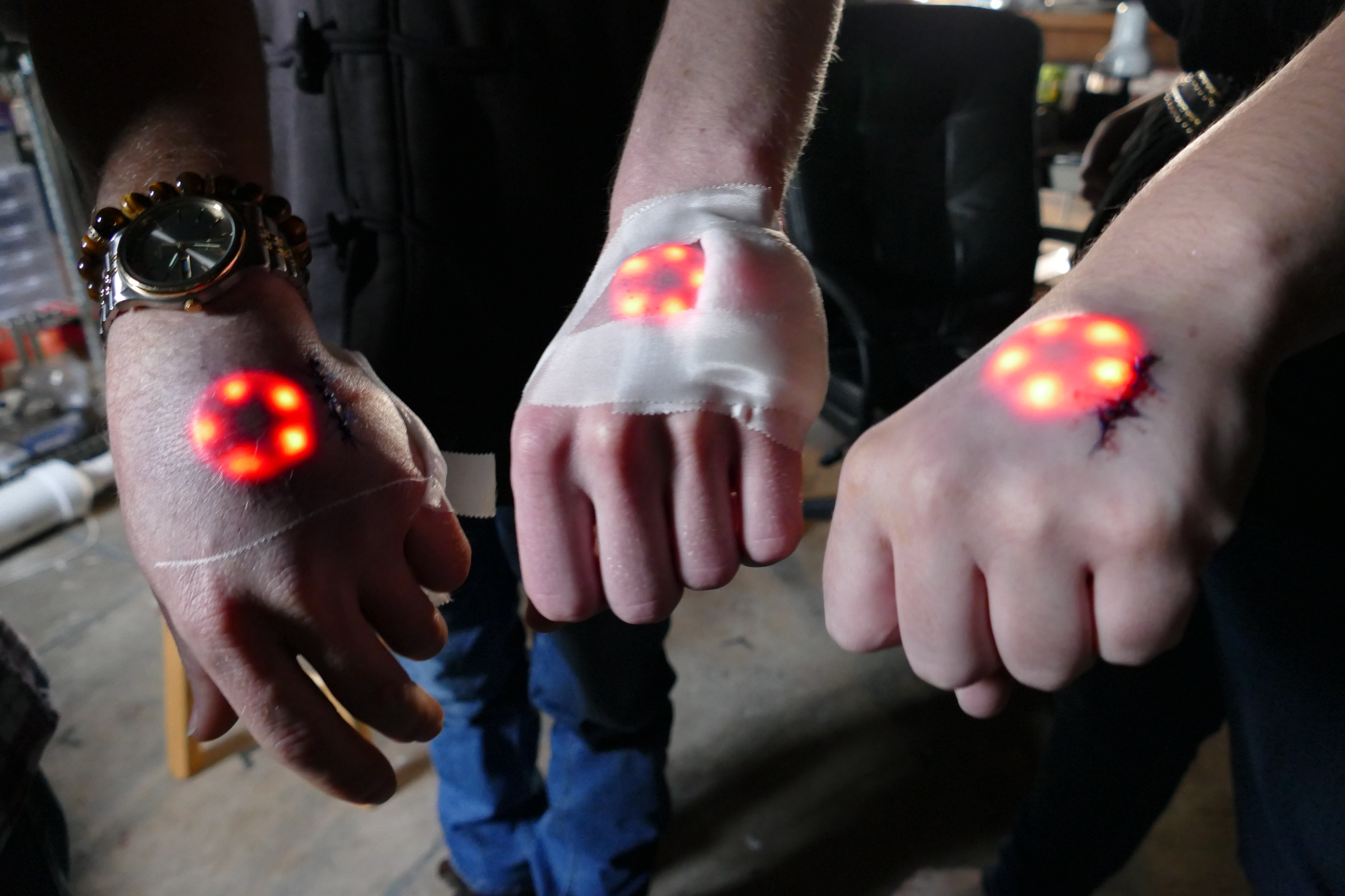
- Northstar: An implantable device featuring five LEDs visible through the skin. Northstar is not only an aesthetic innovation but also an experimental project to test the human body’s capacity for technological interaction.
- Bottlenose: A wearable technology that uses implanted or haptic magnets as input devices and conveys information through the nervous system to the user. This device provides a platform for direct information transfer through the human nervous system, pioneering applications in future neurotechnology.
Although these devices are mostly experimental, they share a crucial characteristic: they are applied outside formal medical procedures, and if done incorrectly, they can pose serious health risks. Infection, nerve damage, implant rejection, and long-term complications are always present in experimental bio-modification.
Are Grinders aware of these risks? Absolutely. Risk-taking is a philosophical principle for this community, and the desire to experiment with and transform their own bodies takes precedence. Due to their DIY approach, implant procedures are often carried out among a few friends in settings with questionable medical qualifications, raising ethical and health concerns.
So?
Is it reasonable to pursue biohacking activities while overlooking ethical and health risks for the sake of human progress? Or should these activities be left to trained professionals in medically approved, safe environments?
Every technological advancement involves risk. Consider space exploration: numerous failures and accidents in space programs have cost the lives of 21 astronauts and cosmonauts. Yet humanity took those risks and planted a flag on the Moon, 380,000 kilometers away. Similarly, biohacking is still in its early stages, and the risks are significantly higher.
However, this does not mean that Grinders are entirely justified. Risk-taking may be necessary, but it should be done in a controlled and informed manner rather than haphazardly. While most Grinder operations have been successful, and some individuals possess expert-level knowledge, some choose to perform complex procedures alone or with a few like-minded friends in makeshift settings, which carries serious health risks.
The Risks That Come With Progress
Ignoring risks in radical biohacking can have negative consequences both individually and socially. For instance, if a Grinder attempts to implant a device on their own and fails, it could result in permanent injury or even death. Such incidents spread quickly in the public eye and can reduce societal trust in biohacking and transhumanism. Consequently, neglecting safety and ethical standards in experimental procedures can harm the perception of the entire movement.
In short, gray areas like Grinder practices can and should exist within biohacking. However, health and safety must always remain the top priority. Freedom and individual initiative are important, but abusing this freedom can have serious consequences for both individuals and society. Risk-taking is acceptable, but it must be controlled and conscious, with operations ideally conducted under expert supervision in safe environments.
Conclusion
In summary, gray areas such as Grinder practices can and should exist within biohacking. Yet health and safety should always come first; otherwise, negative outcomes are inevitable. While I oppose the health risks associated with certain Grinder philosophies, this does not mean these practices should be restricted by the state or other authorities. As a libertarian and anarcho-transhumanist, I oppose unnecessary authority in the short term and any authority in the long term. If I supported state-imposed restrictions, the authorities could cancel any biohacking activity they dislike or perceive as a threat, which would undermine one of transhumanism’s most fundamental values: freedom.
I believe society will consciously avoid these risky initiatives. Some individuals will take risks according to their own decisions, and I fully respect that. However, broadly speaking, risky ventures will not be fully accepted by society prior to the transition to posthumanism. Therefore, most individuals will carry out their experiments as safely and responsibly as possible.


